

★ Key takeaways
- A Baker's cyst is fluid-filled swelling behind the knee, usually from an underlying knee problem.
- Treating the cause of the knee irritation is key, not just the cyst.
- Physiotherapy helps settle symptoms and rebuild knee strength.
- Sudden calf pain and swelling needs assessment to rule out other causes.
What Is A Baker’s Cyst? Causes, Symptoms & Treatments
If pain or tightness behind your knee starts getting in the way of daily activities, or if you notice a swelling at the back of your knee that’s noticeable to the touch even without pain, it could be a sign of a Baker’s cyst. For many, it shows up quietly at first. You might brush it off after a long walk or think it’s just part of getting older.
But over time, it can turn everyday movements like climbing stairs or bending down into frustrating, uncomfortable tasks. The discomfort may come and go, but when it lingers, it begins to affect your focus, your sleep, and your energy. Ignoring it can make things worse, especially if the swelling increases or bursts. It’s not just a bump behind the knee. It’s a sign that something deeper is going on.
Not sure what is safe to do right now? A physio can tell you in one visit.
What is a Baker cyst?
Most knees do not need rest. They need the right load at the right time.
A Baker’s cyst is a fluid-filled lump that forms behind your knee. It’s also known as a popliteal cyst or synovial cyst, all names for the same thing. This happens when your knee joint gets irritated or damaged, and extra joint fluid builds up.
Since the fluid can only move one way, it pushes out the back of your knee and forms a noticeable bump.
Baker’s cysts aren’t dangerous or cancerous. They’re not tumours and don’t turn into anything more serious on their own, but they can still cause discomfort or limit movement.
What Causes A Baker’s Cyst?

A Baker’s cyst, also known as a popliteal cyst, is a fluid-filled swelling that forms behind the knee. It occurs when the knee joint produces too much synovial fluid, the natural lubricant that helps the joint move smoothly. This excess fluid can build up and create pressure, forming a lump that’s often noticeable and sometimes painful.
The knee joint is the largest and strongest joint in the body. It relies on synovial fluid to reduce friction during movement. However, when the joint becomes irritated or damaged, it can overproduce this fluid. The result is often a Baker’s cyst. There are several conditions and injuries that can trigger this overproduction of synovial fluid:
- Osteoarthritis
- Rheumatoid arthritis
- Gout or high uric acid levels
- Tears in the meniscus, the cartilage that cushions the knee joint
- Ligament injuries, such as ACL, MCL, LCL, or PCL tears
- Repetitive strain or overuse injuries
- Sprains, hyperextensions, dislocations, and fractures
All of these issues can cause inflammation, swelling, or joint instability. In response, the body tries to protect the knee by producing more fluid, but when the joint cannot absorb it all, the fluid collects behind the knee. In addition to injuries and joint disease, there are other structural or mechanical factors that may contribute to the development of a Baker’s cyst:
- A channel between the cyst and the knee joint can allow fluid to flow and collect in one area
- Muscle movement at the back of the knee may squeeze the joint and force fluid into surrounding tissue
- A pressure difference between the inside and outside of the knee joint can push fluid outwards
- Swelling of the bursa (the body’s natural cushions around joints) due to friction or repeated minor impact
- Bulging of the joint lining (synovial membrane) into the back of the knee
While a Baker’s cyst can develop in people of all ages, it is more commonly seen in adults aged 35 to 70. Individuals who have experienced knee injuries or suffer from ongoing joint problems, including inflammation or infections like septic arthritis, are especially at risk.
What Are The Symptoms Of A Baker’s Cyst?

The most obvious sign of a Baker’s cyst is a noticeable lump or swelling behind the knee. However, symptoms can vary depending on the size of the cyst, the condition of the knee joint, and whether complications are present. In some cases, there may be no baker’s cyst symptoms at all, and the cyst is only discovered during an examination for another knee-related issue.
When symptoms do occur, they commonly include:
- Pain or discomfort in the knee
- Swelling behind the knee, and in some cases extending into the lower leg
- Stiffness and tightness in the joint
- Difficulty fully bending or straightening the knee (limited range of motion)
In more severe cases, the cyst may rupture. If this happens, it can cause:
- Sudden swelling
- Redness or bruising around the knee or calf
- A sensation of warmth
- Discomfort or pain that travels down the leg
Additionally, a large cyst can sometimes press on nearby nerves, leading to:
- Tingling or numbness in the leg
- Weakness in the limb
- A feeling of instability or imbalance when standing or walking, especially if other joint conditions or past injuries are involved
It’s also important to be aware that the swelling and discolouration caused by a Baker’s cyst can resemble symptoms of a blood clot, which is a medical emergency. If you notice unexplained swelling, pain, or changes in skin colour in your leg, seek immediate medical advice. A healthcare provider will be able to assess your symptoms and determine whether they are caused by a Baker’s cyst or something more serious, such as a deep vein thrombosis (DVT).
Not sure what is safe to do right now? A physio can tell you in one visit.
Treatments for Baker’s Cyst
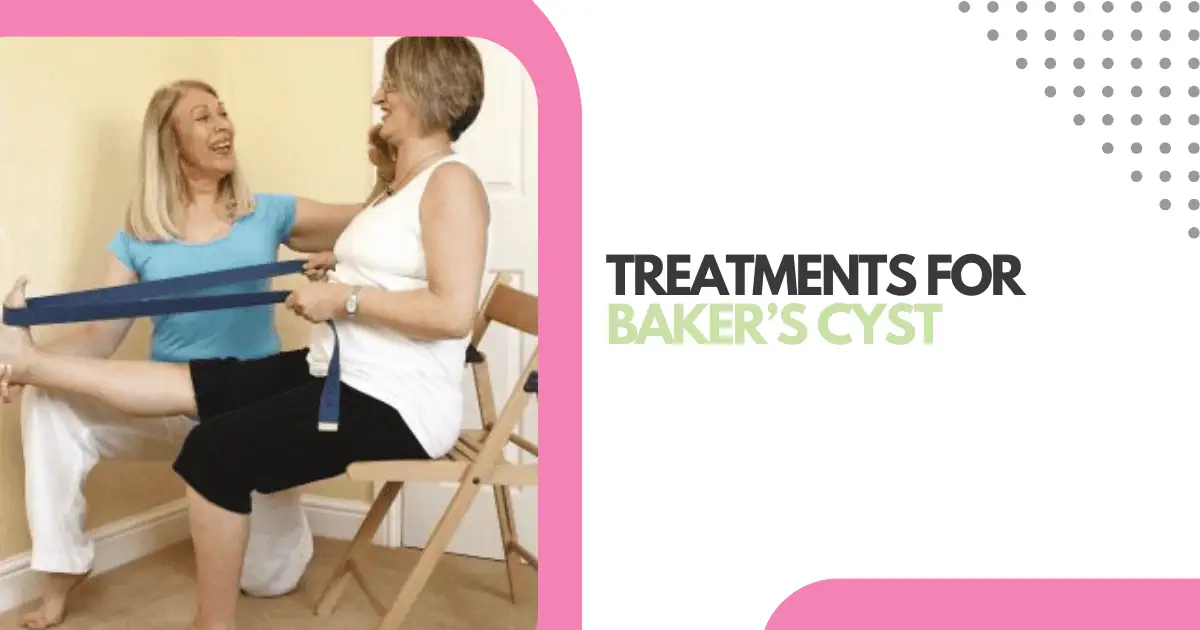
If a Baker’s cyst is discovered but isn’t causing any symptoms, doctors will typically recommend regular monitoring and follow-up consultations to keep an eye on any changes. When treatment is needed, the focus is usually on managing the underlying cause and relieving discomfort.
Initial treatment often includes pain relief medications or steroid injections into the knee joint to reduce inflammation and swelling. In some cases, a doctor may drain the fluid from the cyst to relieve pressure and improve comfort.
Physiotherapy is also commonly recommended. It helps strengthen the muscles around the knee and restore flexibility, making it easier to move the joint and potentially reducing the risk of the cyst returning.
If the cyst is linked to damage inside the knee, such as a torn meniscus or advanced arthritis, surgery might be considered. This typically involves addressing the underlying issue, which in turn can help prevent the cyst from forming again. However, surgery is usually only suggested for patients with more severe symptoms, such as persistent pain or restricted knee movement.
Alongside medical treatment, patients are encouraged to practise self-care at home to support their recovery and protect their joint health. These steps may include:
- Maintaining a healthy body weight to reduce stress on the knees
- Avoiding high-impact activities that place excess pressure on the joints
- Eating a balanced diet rich in fruits and vegetables
- Staying hydrated
- Getting enough rest and recovery time
- Doing regular stretching exercises to support joint flexibility and muscle function
These lifestyle habits, combined with medical guidance, can help manage symptoms and reduce the chances of future cyst formation.
Regain Control Over Your Baker’s Cyst
Recognising the signs of a Baker’s cyst early can help you manage knee discomfort before it worsens. If you notice swelling, pain, or limited movement, seek medical advice to rule out serious issues and get the right treatment. Alongside medical care, simple habits like maintaining a healthy weight, avoiding knee strain, staying hydrated, and stretching can support recovery and prevent future problems. Taking care of your knees now helps keep you active and comfortable for the long run.
If you’re in Sydney and need expert care for knee pain or a Baker’s cyst, Switch Physiotherapy is here to help. With multiple clinic locations across Penshurst, Maroubra, Concord, Lane Cove, Menai, Rouse Hill, and Gladesville, you’re never far from tailored treatment and support to get you moving again. Visit us to find your nearest clinic and book an appointment today.
FAQs
What are the red flags of a Baker’s cyst?
Baker’s cysts are often long-lasting, but they can suddenly become more severe if the cyst ruptures or begins to leak. A sudden ‘popping’ sensation followed by increased pain, redness, and warmth in the leg may suggest a rupture or fluid leakage. These symptoms can resemble more serious conditions like deep vein thrombosis (DVT), making prompt medical evaluation essential.
Is walking good for Baker cyst?
Walking can help maintain strength and stability in the knee joint, but in some cases, it may worsen symptoms by encouraging fluid movement between the joint and the cyst. This is why tailored exercises for Baker’s cyst are often recommended instead, helping support the knee without aggravating the swelling.
What happens if a Baker’s cyst is left untreated?
If a Baker’s cyst isn’t treated, it may lead to complications such as increased swelling, rupture, and worsening pain. In some cases, the cyst can put pressure on nearby nerves or blood vessels, which might result in numbness, muscle weakness, or, though rare, the development of blood clots.
How long does a Baker’s cyst take to heal?
Most Baker’s cysts gradually disappear once the swelling reduces and the knee begins to recover, often within a few weeks.
James Becerra
Master of Physiotherapy · SWITCH Physiotherapy
I love being able to help someone out of pain and get them moving again, the smile on that persons face when they experience pain free movement makes it all worth it.
For me its about going above and beyond to treat the cause of the inju… View James’s profile →
The SWITCH Knee Pain Recovery Guide
Simple, physio-approved steps to settle knee pain and rebuild strength at home.
Related from the SWITCH health library
Ready to get this sorted?
Book online in under a minute and see a SWITCH physio at one of our 8 Sydney clinics.